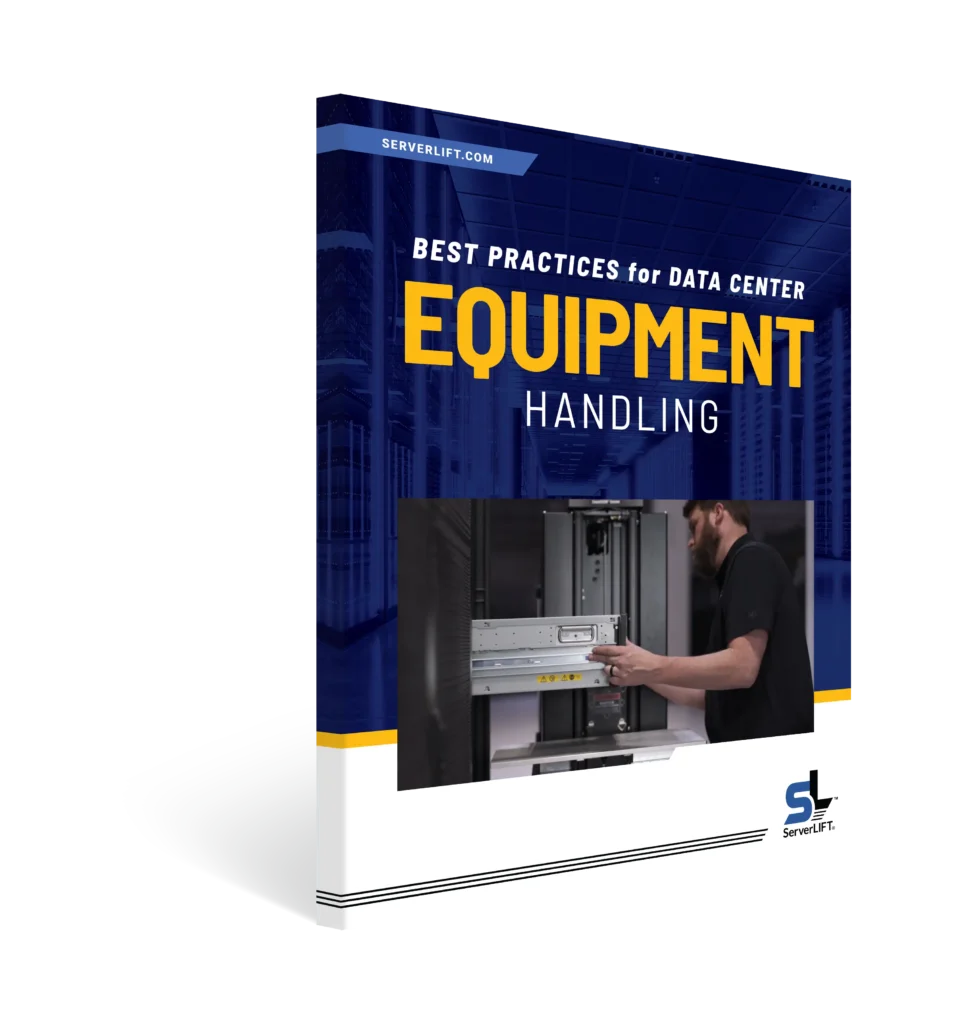

What is the safest way to move and install IT equipment in a data center?
Many data center teams, managers, and even safety officers have the wrong answer. Ask around, and the most common answers you hear will include general-purpose warehouse lifts, improvised cart systems, and even some manual lifting. Unfortunately, none of these are adequate or safe solutions.
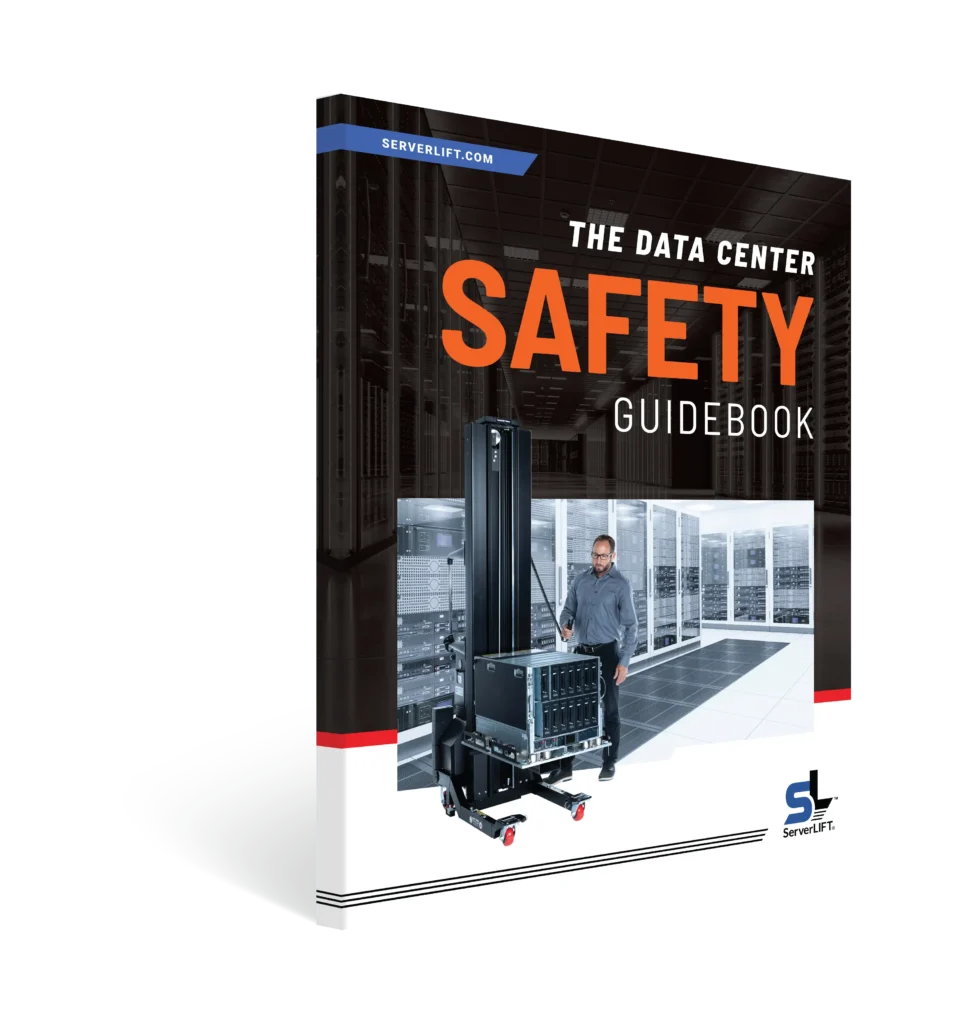
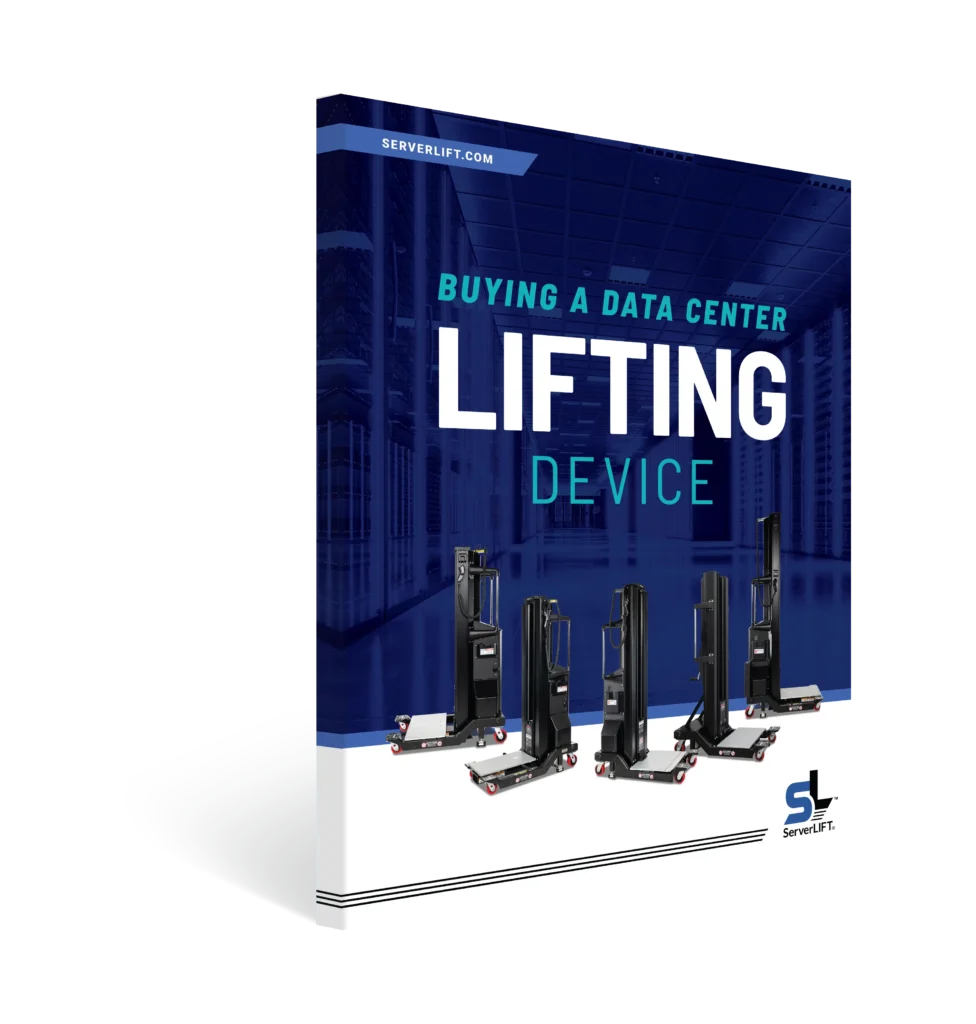
ServerLIFT® data center lifts are the industry gold standard for safety because they are built specifically for data center environments. Each of our lifts is designed to eliminate the manual handling issues that cause many injuries among data center staff and damage to IT equipment.
Below are five reasons ServerLIFT data center lifts are the safest (and most efficient) way to move and install IT equipment.
1. They’re purpose-built for data centers, not adapted from warehouse work.
Many lifts you see in data centers (not to be confused with actual “data center lifts”) were designed for warehouses, construction sites, or general material handling. But data centers have narrow aisles, raised floors, densely populated racks, and potentially millions of dollars’ worth of expensive IT equipment that can’t be dropped or tilted into position. That means every installation you perform with a generic warehouse lift exposes your facility to costly damage and injuries. Generic lifts simply aren’t meant to do that kind of job.
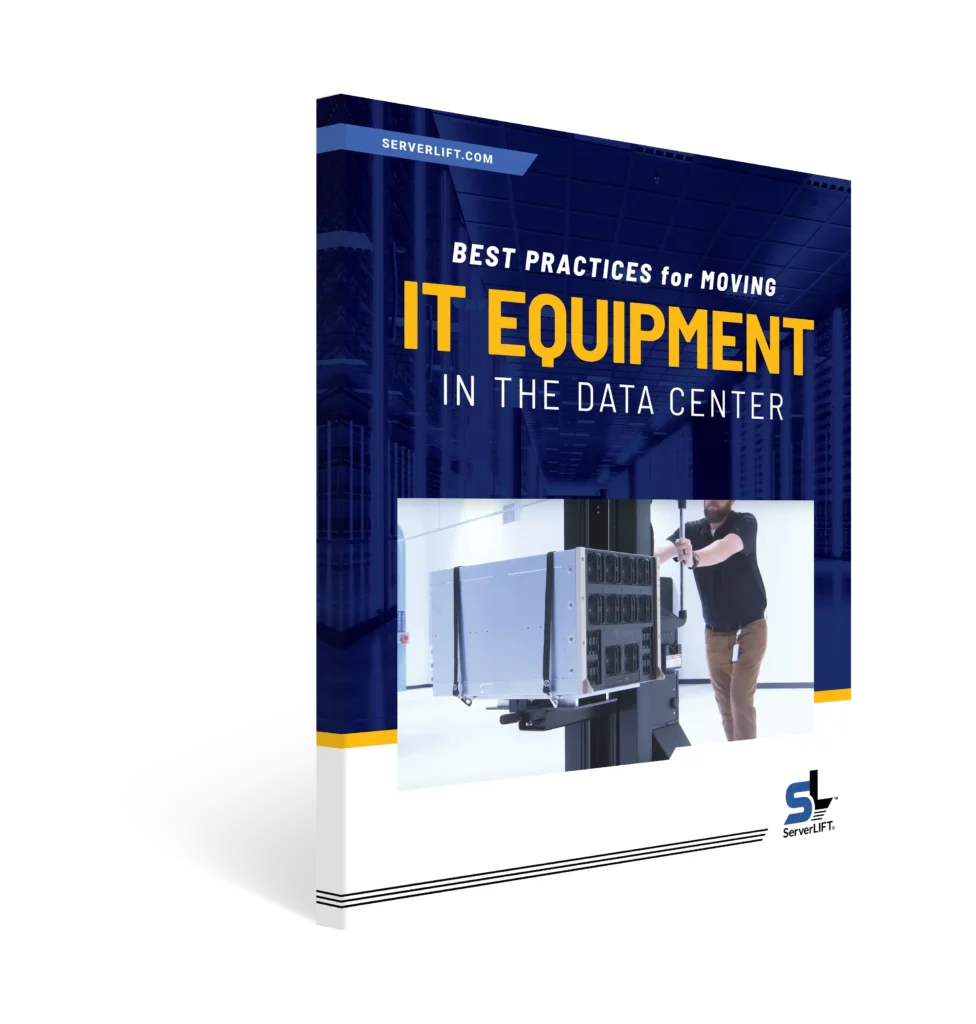
On the other side of the coin, ServerLIFT data center lifts are built specifically for moving, positioning, installing, and removing heavy rack-mounted IT equipment. The ServerLIFT SL-500X® lift in particular has been recognized as the “industry-standard” all-purpose electric data center lift. It safely lifts up to 500 pounds, reaches rack positions up to 52U, and can handle blade chassis, switches, storage arrays, power supplies, and other rack-mounted equipment.
The difference comes down to precision. A general-purpose lift can move heavy weight, but moving weight is not the problem. The problem is how to support equipment at exactly the right height and angle, in a tight aisle, without forcing technicians to muscle through the final installation by hand. Purpose-built data center lifts eliminate the awkward improvisation that can lead to dropped equipment and injuries.
2. Safety certification is central to our data center lifts.
ServerLIFT devices are the only safety-certified lifts available for data center use that meet both U.S. and global standards. The SL-500X® carries the UL listing, along with CE and FCC/IC certification.
This matters for more than just technical reasons. When you buy a ServerLIFT data center lift, what you’re actually buying is risk reduction. Safety teams, compliance officers, insurers, and executives all want to be assured that a piece of safety equipment will help to avoid problems rather than simply looking good on paper. Our safety certifications are a documented, third-party verifiable answer to that question.
3. Stability features protect data center workers and equipment through the entire move.
The most dangerous moment during a data center server move is not the long, slow roll down the aisle when you might think a general warehouse lift is enough. It’s the final few inches of the move, when technicians must align the equipment with the rack, hold it steady despite immense weight, and keep it from shifting as they slide it into place. If any one of those maneuvers goes wrong, you’re looking at probable technician injuries and potentially damaged expensive IT equipment.
ServerLIFT data center lifts keep workers and IT equipment safe throughout the entire move. Our products feature dual-point stabilizer brakes that lock the lift in place, an all-steel frame, and an included strap kit that keeps loads secure during transport. The lifting platform is designed to minimize flexing and sagging under heavy loads, so you can trust it to stay steady and not shift during critical moments.
All these safety features put together reduce the need for technicians to manually act as a stabilizing force. That’s the whole point: The lift holds the load, not the workers’ bodies.
4. Precision positioning reduces the risky “last-mile” installation problem.
Heavy IT equipment can be difficult to align precisely with rack slots if you’re relying on manual lifting or on general-purpose warehouse lifts that don’t have fine-tuned control over the lifting platform. Even a small height mismatch will force technicians to push, twist, tilt, and otherwise try to correct the alignment problem by hand. That’s a recipe for injuries and equipment damage.
All of our lifts provide granular control over the lifting platform, but the front-loading SL-500FX™ addresses this issue exceptionally well with a forward-sliding platform and SmartTILT™ shelf adjustment for front-to-back level alignment. When used with the FE-3X™ attachment, it can support equipment up to 20 inches deep into the rack. The RS-500X™ J-Rail Assist attachment, compatible with most of our lifts, provides adjustable angling for rail installations, allowing teams to ease equipment into slotted rails with minimal manual effort.
This kind of precision positioning eliminates the temptation to manually “just nudge it over there a bit more” and prevents injuries to technicians and damage to IT equipment.
5. They make one-technician moves possible (even easy).
Every additional technician involved in a heavy IT move introduces another potential point of failure to the whole process. More people mean more timing variables, more grip changes, more gaps in communication, more opportunities for uneven lifting, and more frantic overcorrections when the load starts to slip. To make IT moves as safe as possible, you need to minimize the human element and let the machine do the heavy lifting and alignment.
ServerLIFT’s data center lifts are designed so just one technician can perform almost any move with ease. In fact, you can accomplish a faster and much safer move with just one tech using a ServerLIFT device than you could using a whole team of manual lifters.
A single ServerLIFT data center lift can revolutionize a facility’s workflow to take the pressure off of human workers and put the load where it belongs: securely on a powered electric lift. Need a customized ServerLIFT solution for your data center? Contact us.
FAQ:
What is the safest way to lift IT equipment in a data center?
The safest method is using a purpose-built, safety-certified ServerLIFT data center lift. Lifts designed specifically for rack-mounted IT equipment eliminate manual handling, improvised alignment, and multi-person coordination that cause most data center injuries and IT equipment drop incidents.
Why can’t I use a standard warehouse lift in a data center?
Warehouse lifts are designed for open environments with wide aisles and non-sensitive loads. Data centers have narrow aisles, raised floors, densely populated racks, and equipment that requires precise positioning at exact rack heights. A general-purpose lift can move a weight but cannot reliably support the final installation step, during which most safety incidents occur.
How heavy are modern servers and IT equipment?
Rack-mounted servers, blade chassis, storage arrays, and AI accelerator systems can weigh anywhere from 50 pounds to well over 200 pounds per unit. High-density AI servers have significantly increased the average equipment weight, making mechanical lifting assistance essential rather than optional.
Can one technician safely move a server using a ServerLIFT data center lift?
Yes. We purposefully design our data center lifts for “one-tech-per-move” operation. The lift handles transport, positioning, and load support, while the technician controls the process without needing a second person for stabilization or assistance.
What certifications should a data center lift have?
Look for UL listing, CE certification, and FCC/IC certification at minimum. These indicate the equipment has been tested and validated against recognized U.S. and international safety standards. This provides third-party confirmation that the data center lift meets the safety expectations of regulated data center environments.
How does a ServerLIFT data center lift reduce injury and damage risk?
By eliminating manual handling. Most data center injuries and IT equipment damage occur during the final alignment and installation phase. A purpose-built ServerLIFT data center lift mechanically holds the load throughout the entire process, removing the worker from the role of a stabilizing force.