
What trends will we see for data centers in 2026? If “AI” is the first thing that comes to mind, you’re right. Because of the ever-increasing demand for AI tech, there will also be a domino effect as data centers upgrade infrastructure, secure access to limited resources, and acquire the talent necessary to keep it all running smoothly.
Here’s what to expect for the coming year in the data center industry.
1. AI remains at the top of the list for future data center planning.
Today, data center planners are primarily focused on AI. This applies to both smaller data centers and hyperscalers with household names.
Amazon Web Services (AWS), Microsoft Azure, Google, Meta, and Oracle are expected to spend roughly $602 billion this year. Much of that spending goes toward upgrades needed to stay on the cutting edge of AI development.
AI has become the driving force behind nearly all major infrastructure decisions, from building location to chip design and everything in between. CPUs no longer dominate the data center landscape. Today’s data centers are dominated by high-performance computing (HPC), with GPUs and AI-specific chips.
AI has data centers everywhere, looking for more power, personnel, and land to expand facilities. Since there’s a bottleneck in acquiring each of these resources, we expect fierce competition in 2026.
2. The waitlist for power connections is prompting hyperscalers to seek alternative power sources for their data centers.
Some major markets are experiencing delays of five to seven years for new power hookups. With competition as demanding as it is, this timeline is unacceptable for the major players who can afford to do something different.
Developers have started turning to alternative methods of power generation to avoid total reliance on local grids:
-
- Microgrids: Independent power grids are a great option when larger grids fail or aren’t available. Some facilities are using creative methods, such as gas, to generate their own power and supplement what’s available from the main public grid.
- Natural Gas and Fuel Cells: Getting off the main grid altogether takes some planning, but a few data centers are doing it with fuel cells and natural gas turbines. This solution allows facilities to run primarily on independently generated power, while most retain the ability to tap into the main grid in emergencies or during high demand.
- Going Nuclear: Nuclear power is widely considered to be one of the cleanest and most efficient power sources, and this isn’t lost on data center developers. We’ve seen a notable trend among hyperscalers of buying land near power plants (and, in some cases, entire reactors) to take advantage of nuclear power.
- New Sites: When traditional tech-heavy regions get overloaded, the natural response is to look elsewhere for power where demand is lower. There’s been a lot of secondary-market expansion recently into places such as Georgia and Ohio, allowing developers to skip the waitlist in high-demand areas and get access to power faster.
- Efficiency Upgrades: When you have limited power, it is best to make the most of what you do have. That’s the theory behind why some data centers are pouring funds into cooling upgrades and more efficient chips, in the hopes they can squeeze more efficiency out of their limited electricity supply.
3. With power density increasing, advanced cooling methods are crucial.
We expect to see much more liquid, immersion, and direct-to-chip cooling in 2026 and beyond. Not only does better cooling lead to higher power usage efficiency, but it’s also necessary for keeping modern AI infrastructure running well.
Revamping an entire facility from traditional air cooling to other methods takes time and a significant up-front investment. But the payoff is that liquid cooling can handle 3,500 times the heat that air can. That means rack power can be denser, rack setups can be more compact, and cost savings due to better cooling may be higher.
4. Fiber networks must be adapted to keep up with bandwidth demand.
AI and LLM training places a massive demand on fiber networks. Bandwidth is a bottleneck that most data centers can’t afford to deal with, as competition continues to heat up. Additionally, data centers can’t simply use just any means of data transmission, since many people and companies these days share intimate details of their lives, medical histories, business operations, and finances with AI apps.
To boost bandwidth and respond to the increasingly personal nature of AI data, developers are installing:
- Hybrid fabrics that use both optical and electric fibers that can adapt to volatile workloads
- Optical circuit switches that take advantage of silicon photonics to produce nearly instant connections
- Fiber layer encryption that keeps sensitive or personal data safe during transmission
5. Regulations are tightening in some areas.
Locals do not enjoy having data centers in their backyards, which drives up residential water and electric bills.
Local and state governments have begun tightening data center regulations to ensure each facility better fits into the community without disrupting residents’ lives. Some examples include:
- In Georgia, data centers larger than 100 MW must now pay in advance for upgrades to the power grid.
- Aurora, Illinois has halted all data center approvals for six months. They cited the need to rewrite zoning laws for traffic, noise, and water use to ensure residents aren’t negatively affected by data centers.
- A county in Virginia issued a noise restriction that limits decibel output. This affects data centers located near housing developments, in that they now have to redesign their loud cooling systems.
We also expect higher development costs and stricter environmental regulations as data centers expand into secondary markets near residential areas.
6. Data center infrastructure management is becoming increasingly automated.
As complex, volatile, and delicate as AI infrastructure tends to be, it’s nearly impossible to manage it all manually. Data centers are turning to AI-driven automation to monitor systems, predict points of failure, schedule maintenance, perform software updates, and optimize power and cooling as needs change.
Additionally, since these systems are now so complex and interrelated, most data centers use digital twins to model changes before they go live in the real-world facility. This helps avoid unforeseen problems and maintain high uptime.
7. Hyperscalers are now educating the workforce to work in modern AI data centers.
Many data centers know there is a shortage of workers with the specialized knowledge and skills required to keep AI-heavy facilities running smoothly. Skills such as network and power grid engineering, liquid-cooling maintenance, and grid operations are in short supply.
This has led to several education initiatives intended to train workers in the skills data centers need the most.
Texas Tech and Fermi America, for example, have committed some facility space for classrooms where workers can learn critical data center skills. Amazon also has a new site dedicated to STEM education and specialized training. And Meta has begun funding community STEM education programs in the regions near their data centers. Taken together, these initiatives signal a trend toward data centers taking an active role in building the workforce they need in 2026 and beyond.
Have data center upgrades in 2026? Partner with ServerLIFT to ensure all your IT moves go smoothly.
It’s tough to keep up with the trends if you’re fighting your own infrastructure. Moving heavy IT equipment can be risky and unsafe without a purpose-built solution that gets the job done quickly and easily.
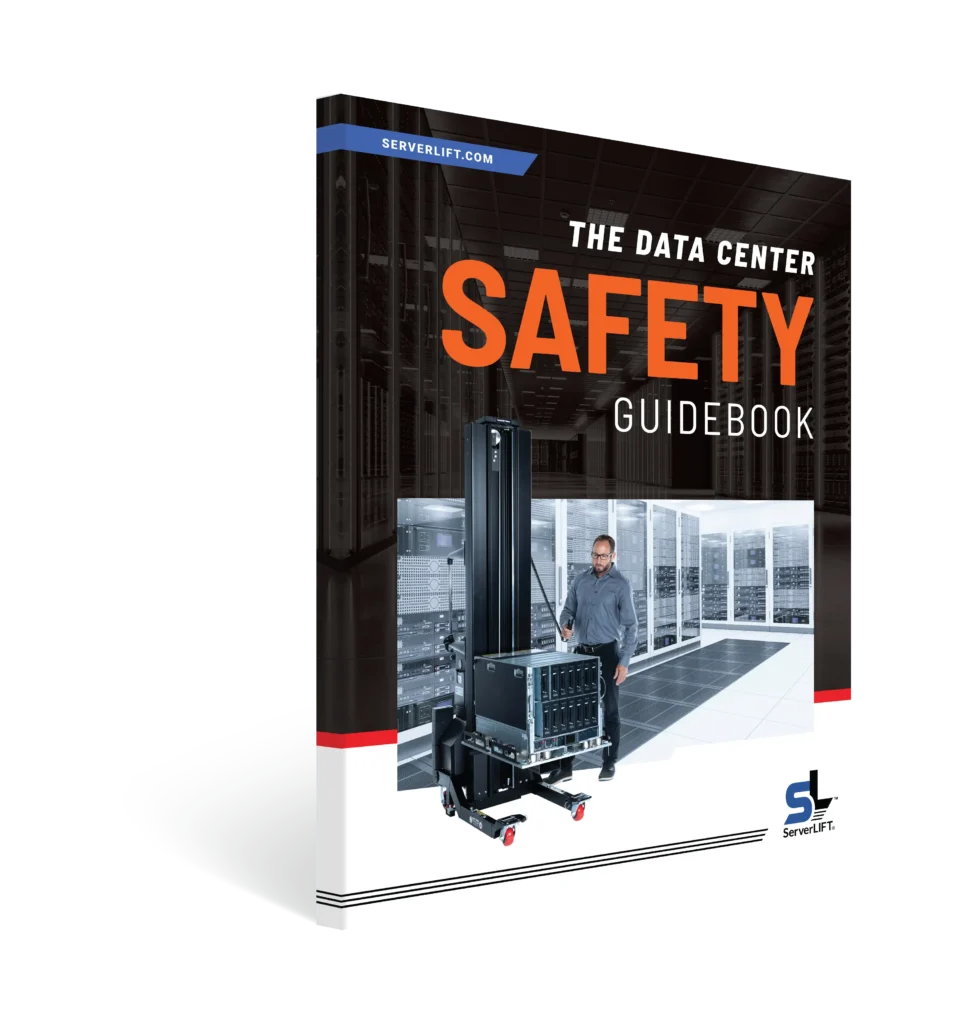
With a purpose-built ServerLIFT data center lift, you can swap out servers and switches, haul in new cooling systems, rearrange your aisles, or bring in supplies to a whole new facility, all without risking injuries to your workers or damage to your expensive IT equipment.
Let us know what you need, and our ServerLIFT experts will help find the perfect data center lift solution for you. Contact us here.