
Leading hyperscale data centers prioritize more than just growth. To be successful, they must ensure the 安全 of personnel, equipment, and data, strive for 可持续性, and build resilient infrastructure that can withstand disruptions.
By leveraging a combination of AI, custom hardware, and continuous innovation, hyperscalers are shaping several important trends in modern data centers. These principles are applicable to data centers of all sizes.
Safety and Security
Life Safety Systems (With Redundancies)
Fully redundant and independently powered safety systems are crucial. At a minimum, each facility should stock smoke detectors, emergency lighting, and fire suppressors. Fire suppression systems should be gas-based, such as those using FM-200 or NOVEC 1230. These clean-agent solutions minimize damage to sensitive electronics while still effectively extinguishing fires. Safety systems (including backups) should be routinely tested to ensure their readiness in the event of a crisis.
Staff Training
All engineers and technicians should receive rigorous safety training. Training should cover safe power handling, fire response, and environmental health and safety hazards. Employees may need to take supplemental training on a regular basis so they stay updated on changes in equipment or regulations. Drills can also help your team stay prepared for emergency scenarios.
Remote Monitoring
AI-driven tools should flag anomalies early in an emergency, before the environment becomes unsafe. For instance, an automated tool could detect and provide a warning when temperatures rise too high, too quickly. Other sensors can track humidity, air flow, and power surges to prevent dangerous fluctuations. Remote monitoring can help solve many potential problems before they become dangerous.
Access Control
Hyperscale data center properties have multi-layered security perimeters that include fencing, biometric scanning, surveillance, and security guards. These measures restrict access to verified personnel and help to reduce sabotage, theft, and compromised data risks. In some instances, AI-enabled surveillance can facilitate real-time threat detection and inform effective responses.
Automated Failovers
When primary systems fail, redundant systems help minimize downtime and reduce the likelihood that a single failure will escalate into a major catastrophe. Automated controls can reroute workloads instantly, which reduces the need for manual intervention. This could save precious moments and prevent unnecessary downtime.
Earthquake and Weather Proofing
When selecting a site for a new hyperscale data center, choose locations with minimal severe weather. Building and reinforcing facilities to include seismic bracing, flood mitigation features, and wind-resistant structures will help protect equipment when bad weather inevitably occurs.
State-of-the-art facilities often have roofs, walls, and foundations rated based on the weather threats in the local region, and they frequently have drainage systems designed to handle sudden water influx.
Sustainability and Efficiency Measures
PUE Optimization
Measuring 电力使用效率 (PUE) is an effective way to ensure energy consumption remains at a sustainable level. Most hyperscalers aim to achieve a PUE of 1.1 or lower. Continuous monitoring and load balancing can help keep this metric low, even during seasonal usage variations.
Custom Chips and AI Workloads
Energy-efficient processors and machine-learning workload optimization programs can reduce power waste. Purpose-built chips also help hyperscalers process more data with less heat output. As a bonus, this translates to cooling methods being more efficient.
Liquid Cooling and Immersion Cooling
Liquid and immersion cooling reduce the need for energy-intensive air conditioning, especially in high-density server environments. These systems also allow hyperscale data centers to place server components closer together, which can improve power density and overall performance.
Carbon-Neutral Goals
Google, Microsoft, and AWS all have ambitious goals for achieving carbon neutrality or even 100% renewable energy by 2030. Achieving total energy independence is a lofty goal for smaller data centers, but it’s a good finish line to strive for. Even a partial shift toward renewable energy sources can significantly reduce emissions.
Power Purchase Agreements (PPAs)
Long-term renewable energy investments—think solar, wind, and hydroelectric power—lower demand on the local energy grid and can reduce a facility’s carbon footprint. These agreements also provide cost stability when energy prices fluctuate.
Battery Storage and Microgrids
Large-scale energy storage helps hyperscalers balance their grid usage and ensure resilience in the face of increased demand and grid interruptions. It’s crucial to invest in battery backups and microgrid development. These systems can even operate independently during full outages and keep core services online for critical industries.
Water Usage Effectiveness (WUE)
Hyperscalers strive to minimize water usage while maximizing the effectiveness of the water they do use. The most common ways to achieve higher WUE are to use closed-loop systems, reuse gray water, and opt for dry cooling systems in arid climates. Additionally, monitoring tools help data centers fine-tune usage and detect leaks early.
Careful Site Choices
Hyperscalers regularly choose facility locations in regions with access to renewable energy and sustainable water sources. They also install systems to reuse as much water as possible. Both of these are great strategies, regardless of the data center’s size.
Resilient Infrastructure
Modular Architecture
Modular facilities are gaining popularity because they enable rapid scaling without major building renovations or operational disruptions. These modules can also be tested before deployment to reduce the risk of issues occurring during integration.
Availability Zones
Hyperscalers build data centers in clusters. This strategy creates redundancy between buildings, allowing facilities to share failover systems. It also enables dynamic load balancing to maximize efficiency and uptime across the entire zone.
High-Density Racks
High-density racks are a must-have for hyperscale facilities. Optimized for compute-intensive workloads, high-density racks often support 40 kW–80 kW per rack with specialized cooling. They also reduce floor space requirements, which can help data centers maximize ROI per square foot.
Dual Power Feeds and Generators
Hyperscale data centers utilize N+1 or 2N configurations to ensure uninterrupted uptime in the event of grid failure. Backup generators (traditionally diesel, but increasingly powered by hydrogen or battery systems) are tested weekly. Dual feeds reduce dependency on any single source, increasing fault tolerance.
Substation Integration
Many hyperscalers build their own substations to guarantee voltage stability and ensure priority access to utilities. This enables better control over energy distribution and consolidates all utility management under one roof.
Proprietary Fiber Networks
Companies such as Google and Meta have deployed private fiber networks. This enables them to control the reach of their global fiber networks and optimize latency reduction without relying on a third party. Retaining network ownership also helps hyperscalers guarantee data privacy.
Software-Defined Networking (SDN)
SDN enables the dynamic allocation of bandwidth and failover routing, both of which are crucial for scalability in large facilities. This strategy enables faster outage recovery and more efficient network utilization.
Edge Integration
Connecting core sites with edge nodes enables hyperscalers to support latency-sensitive services, such as AI inference and content delivery, with minimal lag. A distributed architecture ensures a smoother experience for end users and improves overall network reliability.
Does your infrastructure need an upgrade?
Hyperscalers have scaled and adapted for modern workloads. But this might seem overwhelming for smaller data centers. In one fell swoop, it is. However, smaller data centers can focus on the lowest-hanging fruit and work their way forward from there.
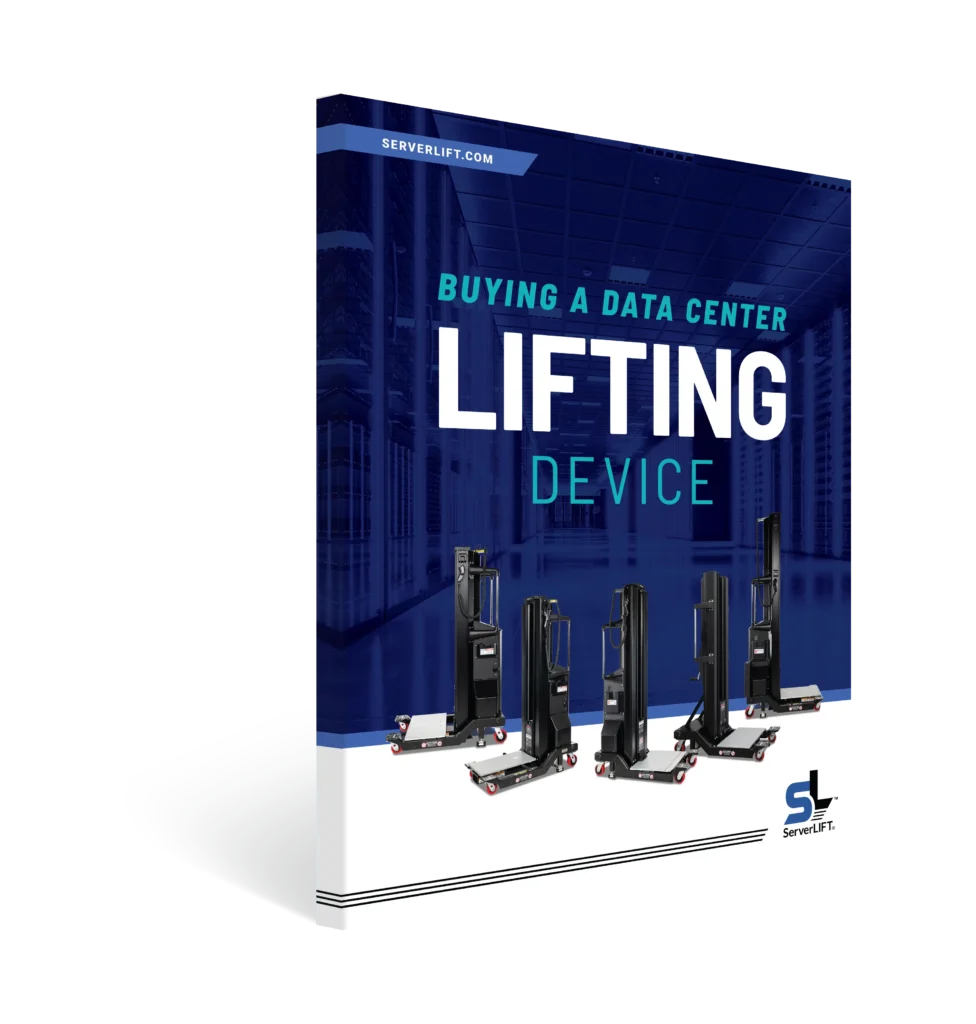
Our purpose-built data center lifts, which are routinely used in hyperscale data centers, can also help smaller data centers. Protect your workers, keep your expensive equipment safe and secure, and complete IT equipment moves and installations faster with one of our server handling devices.
联系我们 and we’ll help you find the perfect solution for your needs.